

How Proforma Global expedites customs compliance with Sensible
Proforma Global has created something unique in Europe: CARES Analytics, a cloud-based platform that automatically reconciles 100% of customs declarations with commercial invoices.

How Ledgebrook focused on speed to transform E&S insurance with Sensible
In the fast-paced world of excess and surplus (E&S) insurance, speed isn't just an advantage, it's a matter of survival. Ledgebrook, an insurtech company disrupting the specialty insurance market, has built their business model around what they call "Ledgebrook speed."

Introducing email data extraction
With email-driven document extraction, organizations can automatically extract structured data from document attachments by simply forwarding emails to Sensible. Using LLM-based classification, the platform intelligently processes any number of attachments per email, optionally parses email bodies, and delivers comprehensive extraction results with metadata via webhook—eliminating manual document handling across industries.
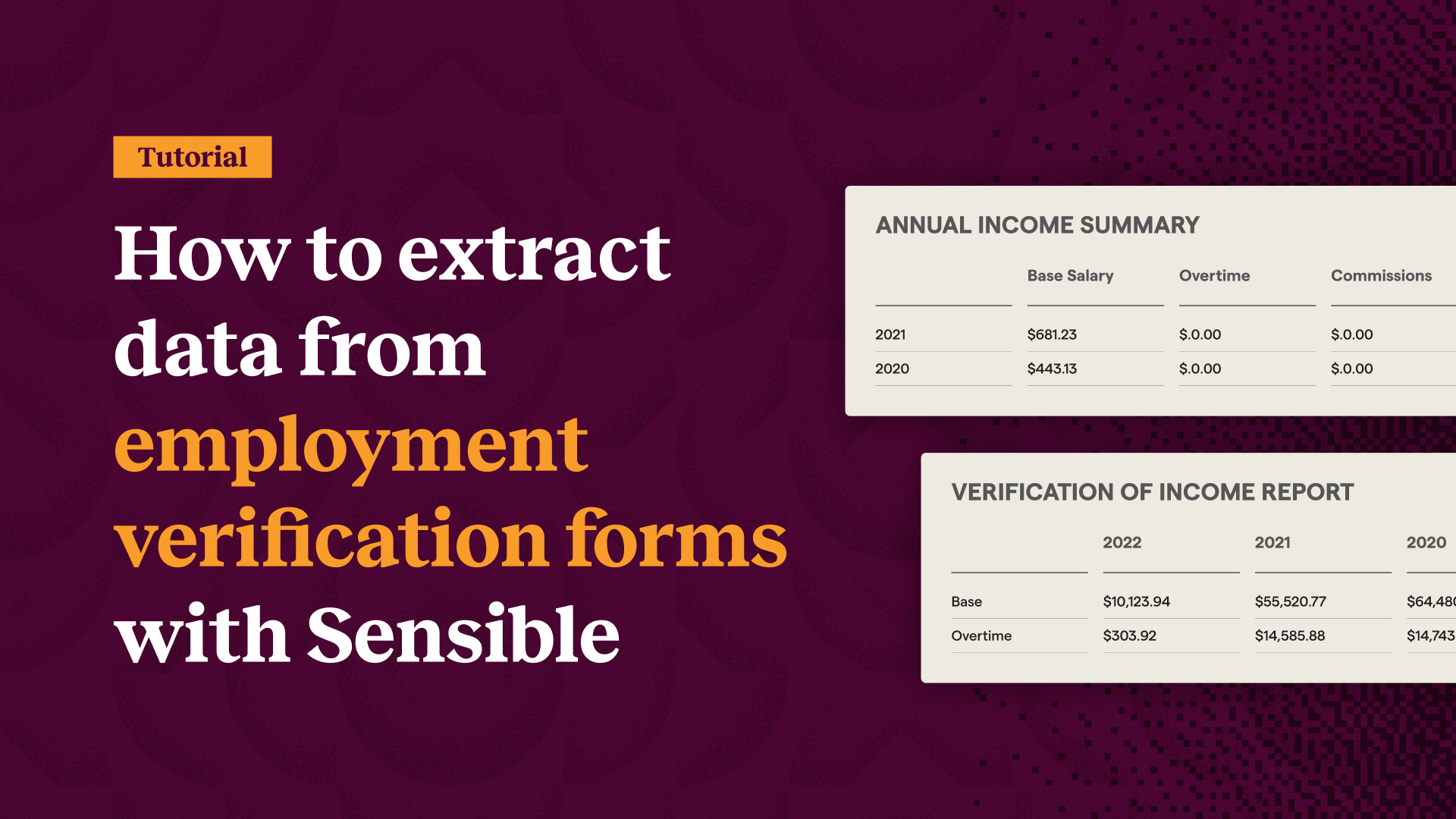
How to extract data from employment verification forms with Sensible
Employment verification forms (VOEs) are critical documents in the lending industry, used to confirm applicant income and employment history. This guide demonstrates how to extract structured data from employment verification documents using Sensible's layout-based extraction methods, comparing approaches for different document formats.
.png)
How to extract data from CMS-1500 forms with Sensible
Explore how Sensible streamlines healthcare insurtech by simplifying data extraction from CMS-1500 forms. This guide offers step-by-step instructions for incorporating Sensible's document processing tools into your product.
.png)
Introducing agentic AI workflows for document extraction
We're excited to announce a significant enhancement to Sensible's document extraction capabilities with the introduction of agentic LLM workflows.
.png)
Splitting multi-document PDFs with LLMs
Many businesses deal with PDFs containing multiple document types in a single file. These "portfolio PDFs" are common across industries and create significant processing challenges.
.webp)
The opinionated guide to JsonLogic for transforming document data
How to write JsonLogic rules that reshape extracted document data: math, string ops, conditionals, and arrays, with the patterns Sensible reaches for first.
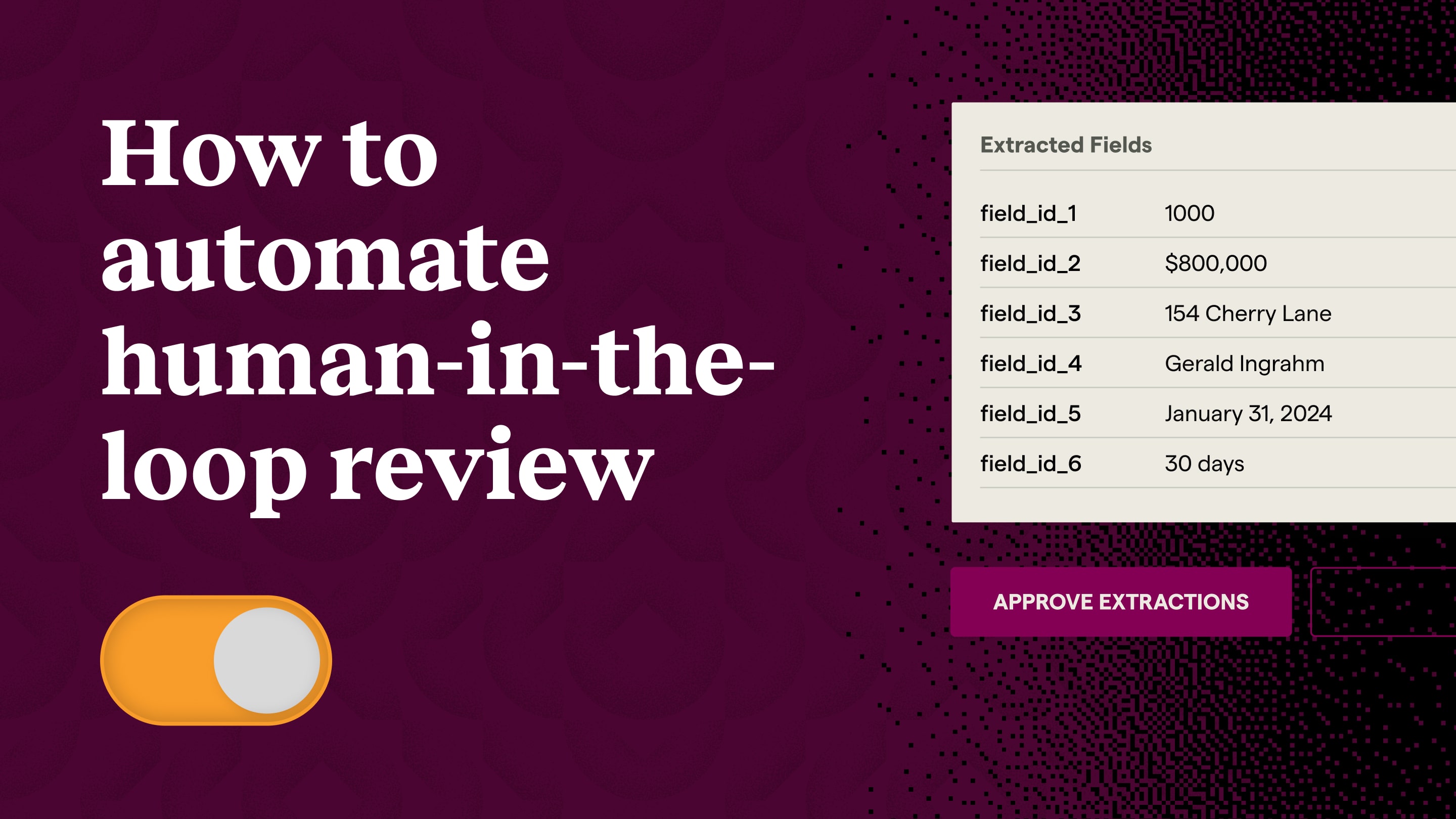
How to automate human-in-the-loop review for document processing
A step-by-step guide to automating human-in-the-loop review in Sensible: set validation triggers, wire up webhooks, notify reviewers, and ingest corrections.
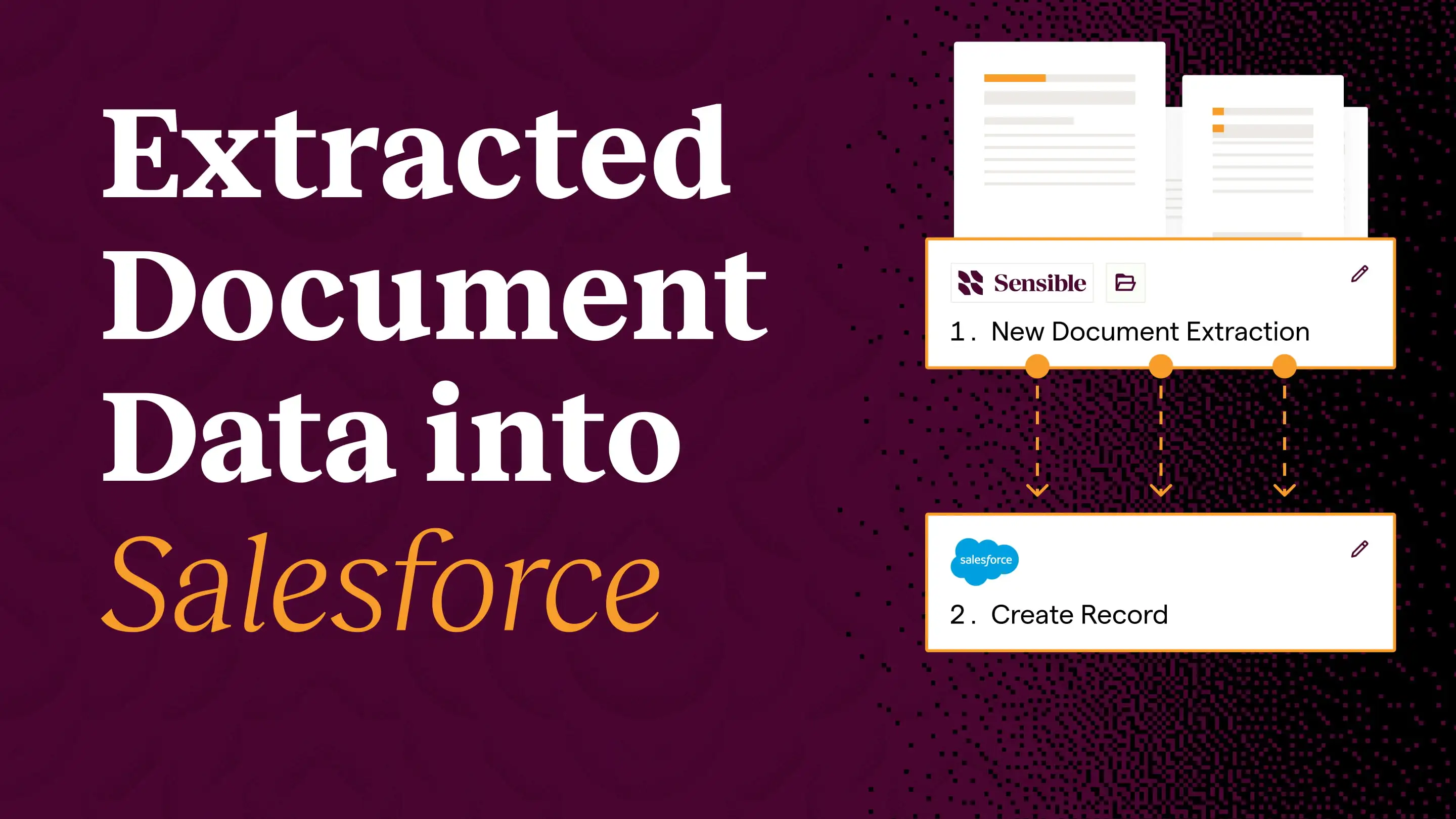

Introducing Human Review: increase extraction accuracy with manual oversight
Learn more about Human Review: a powerful new feature that allows you to easily add manual oversight to your document extraction process.

Beyond embeddings: Navigating the shift to completions-only RAG
We’ve recently explored some new approaches to retrieval-augmented generation (RAG) that rely solely on completions without using embeddings. Learn how this completions-only method compares to embedding-based approaches, and why we believe it may be the future for certain RAG use cases as language models continue to improve.