TL;DR
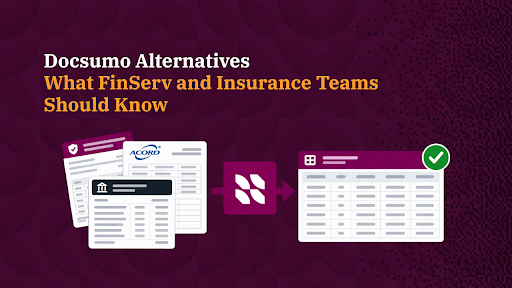
Docsumo handles standard ACORD forms and financial documents well, but finserv and insurance document mixes rarely stay standard. Loss runs vary by carrier, bank statements vary by issuer, and teams report a real accuracy ceiling once variety grows past its 250 pre-trained document types. This piece compares five alternatives built around genuinely different shapes of the same problem: hybrid extraction, enterprise-scale accuracy, lending fraud detection, unstructured claims processing, and no-code workflows, and how to match one to an actual document mix in insurance, financial services or any other industry.
Why Document Variety Breaks Standard Extraction Tools
A mid-size managing general agency processing property submissions from thirty different carriers runs into the same wall almost every finserv or insurance team eventually hits. Each carrier's loss run looks a little different. Declarations pages shift format by state and line of business. A tool tuned to one dominant layout works fine until the next unfamiliar issuer shows up, and someone ends up opening the PDF by hand anyway.
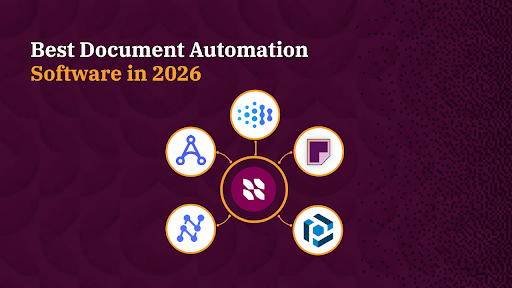
Document automation is a mature category built around exactly that problem, and Docsumo is one of its more established names. It isn't the only shape the category takes, and it isn't the right fit for every document mix a finserv or insurance operation actually processes. This piece compares Docsumo against five alternatives built around genuinely different approaches to the same underlying job. Insurance and financial services are the examples throughout because their documents vary so much, but the same questions apply to healthcare, logistics, real estate and any other industry that handles irregular paperwork.
What Docsumo Handles Well and Where Teams Report Real Limits
Docsumo automates extraction, classification, validation, and routing from documents across lending, banking, insurance, healthcare, logistics and real estate through a five-step pipeline: collection, classification and splitting, extraction, verification, and routing. The platform ships with more than 250 pre-trained document types, including several ACORD forms and certificates of insurance, and reports 99% field-level accuracy with 95% or more of documents processed straight through without manual review.
That strength becomes a weakness in the same MGA scenario above. Docsumo's core coverage is strongest on standard, relatively consistent formats, and teams evaluating it against broader alternatives report accuracy dropping on more diverse document types, longer documents, or complex table extraction. Pricing runs per page rather than per document, a real cost difference on a forty-page loss run compared to a one-page certificate of insurance, and the exact rate isn't published.
The 5 Best Docsumo Alternatives for FinServ and Insurance Teams
1. Sensible: Best for Hybrid Extraction Across Varied Insurance and Financial Formats
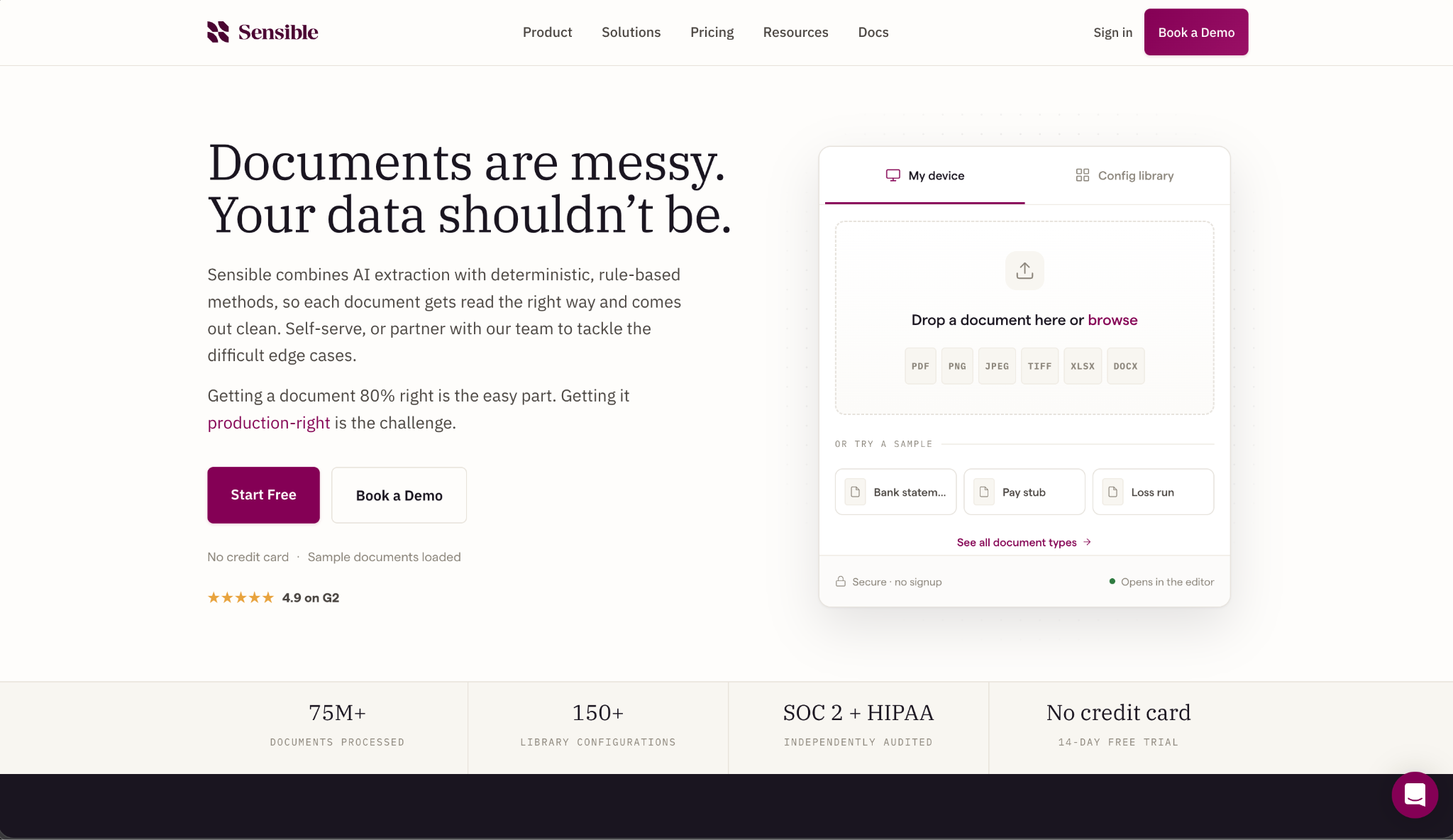
Best for: Teams whose document mix spans insurance, financial services or other industries, with structural variety across carriers, lenders, and issuers.
The MGA scenario from earlier, thirty carriers and thirty slightly different loss run formats, is close to the exact problem Sensible is built to solve. It combines deterministic, layout-based extraction, which runs where document structure is predictable, with LLM reasoning for the sections that vary, both validated against the same schema through a single API. A new carrier's loss run doesn't require rebuilding an extraction pipeline from scratch, and every field carries a source-coordinate trace back to the original document, so you can check discrepancies in seconds. Teams that don't want to build configurations themselves can have Sensible's managed services team build them from their own sample documents and adjust them when a carrier or issuer changes its format.
Key Functionalities
- Insurance document types include loss runs, declarations pages, policies and endorsements, insurance quotes, commission statements, certificates of insurance, and claims forms, with loss runs running 300-plus pages processed in under a minute. These are examples; Sensible can handle custom document types in insurance as well.
- Financial services document types include bank statements, pay stubs, tax forms including 1040, 1099, W-2, K-1, 1120, and 1065, loan applications, closing disclosures, and KYC documents. These are examples; Sensible can handle custom document types in financial services, and the same approach extends to industries such as healthcare and logistics.
- Hybrid extraction architecture pairs layout-based parsing with LLM reasoning under one schema, rather than forcing every document into a single template.
- Source-coordinate traceability on every extracted field makes discrepancies directly checkable against the original document. Customizable output schema lets a team define the output exactly the way a downstream system needs it. Computed fields support custom computation and conditional execution, so values can be calculated, reshaped, or applied only when a condition is met. Managed services let Sensible's team write and maintain the configurations for every document type, run parallel extractions against the team's existing process before go-live, and build the extraction for a new carrier or layout when one appears.
Pros:
- Handles genuine structural variety across carriers and issuers rather than one dominant template
- Covers insurance, financial services and other industries under one system, including custom document types
- Per-document pricing stays flat regardless of document length
- Output schema and logic are customizable, including custom computation and conditional execution Managed services option, where Sensible builds and maintains the configurations 14-day free trial, no credit card required
Cons:
- Newer entrant than Docsumo in brand recognition within insurance specifically
- Self-serve setup involves learning SenseML, Sensible's configuration language, which is where the managed services option fits for teams that prefer a hands-off route
Pricing: The Growth plan runs roughly $499 a month for around 750 documents, about $0.66 per document.
Verdict: The clearest fit for a team processing a genuinely mixed, irregular document set across both insurance and financial services, where per-page pricing and template rigidity are the actual pain points and the team wants either full control of the output or Sensible's managed services team to build and maintain the configurations.
2. Hyperscience: Best for Enterprise-Scale Accuracy Across Multiple Regulated Departments
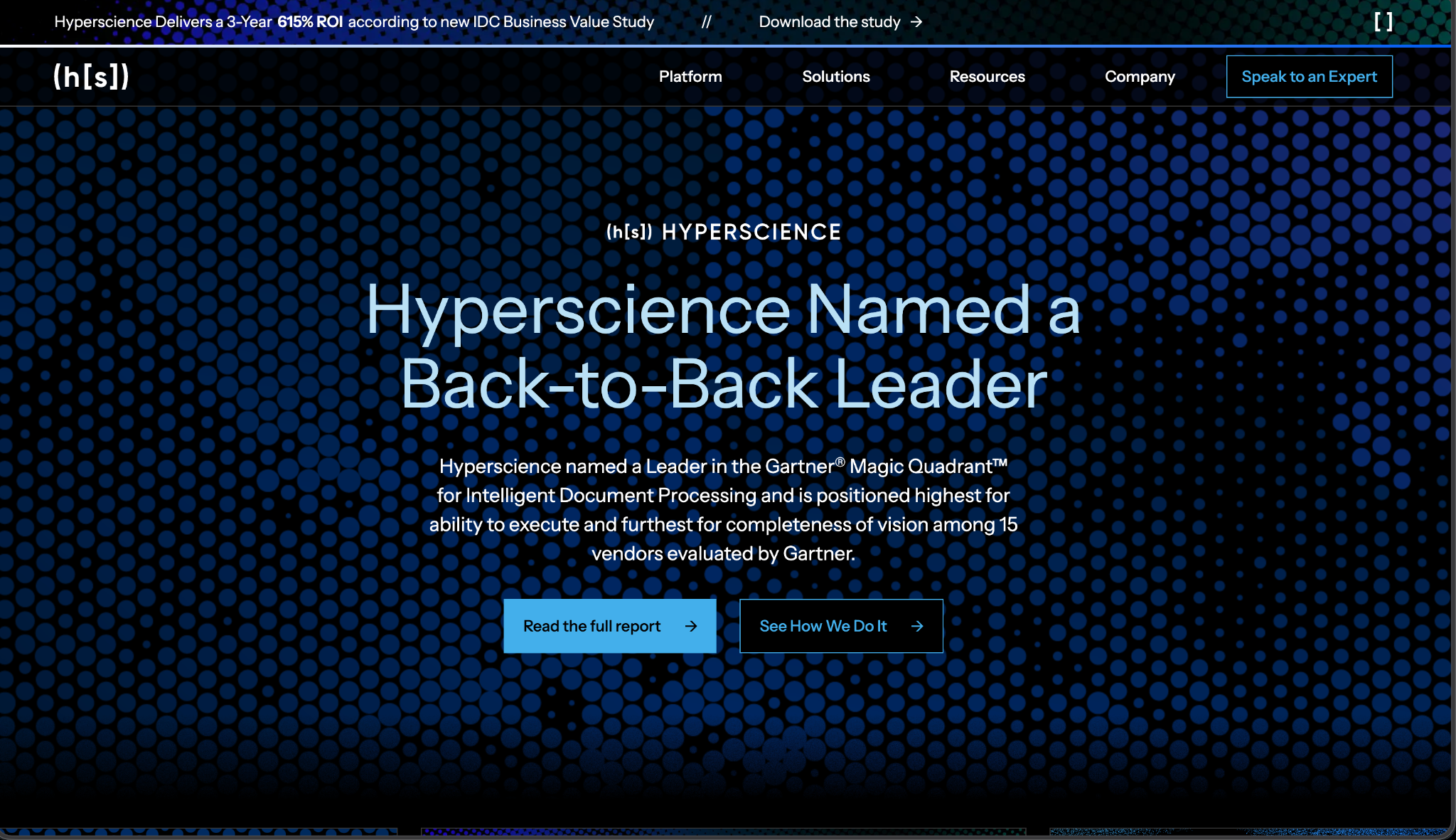
Best for: Large organizations that need one platform spanning financial services, insurance, and other regulated industries under a single deployment.
Hyperscience reports 99.5% accuracy and has been recognized by IDC for strong handwriting recognition, an area that remains a real challenge for many vendors in this category. That combination matters for a document mix that still includes handwritten claims forms or applications, something a purely digital-native tool tends to handle poorly.
Key Functionalities
- Top-end published accuracy at 99.5%, among the highest stated figures in this category.
- Handwriting recognition singled out by IDC as a genuine differentiator most competitors still struggle with.
- Multi-department deployment designed to cover financial services, insurance, and other regulated functions under one platform.
Pros:
- Strongest handwriting recognition claim in this comparison
- Built for scale across multiple regulated departments at once
- High published accuracy rate
Cons:
- Sales-led engagement with no published pricing anywhere
- Heavier process than a smaller carrier or fintech may want
Pricing: Not published. Every engagement requires a direct sales conversation.
Verdict: The right fit for a large enterprise that needs one system across several regulated departments and still processes a meaningful volume of handwritten documents.
3. Ocrolus: Best for Lending Fraud and Tampering Detection
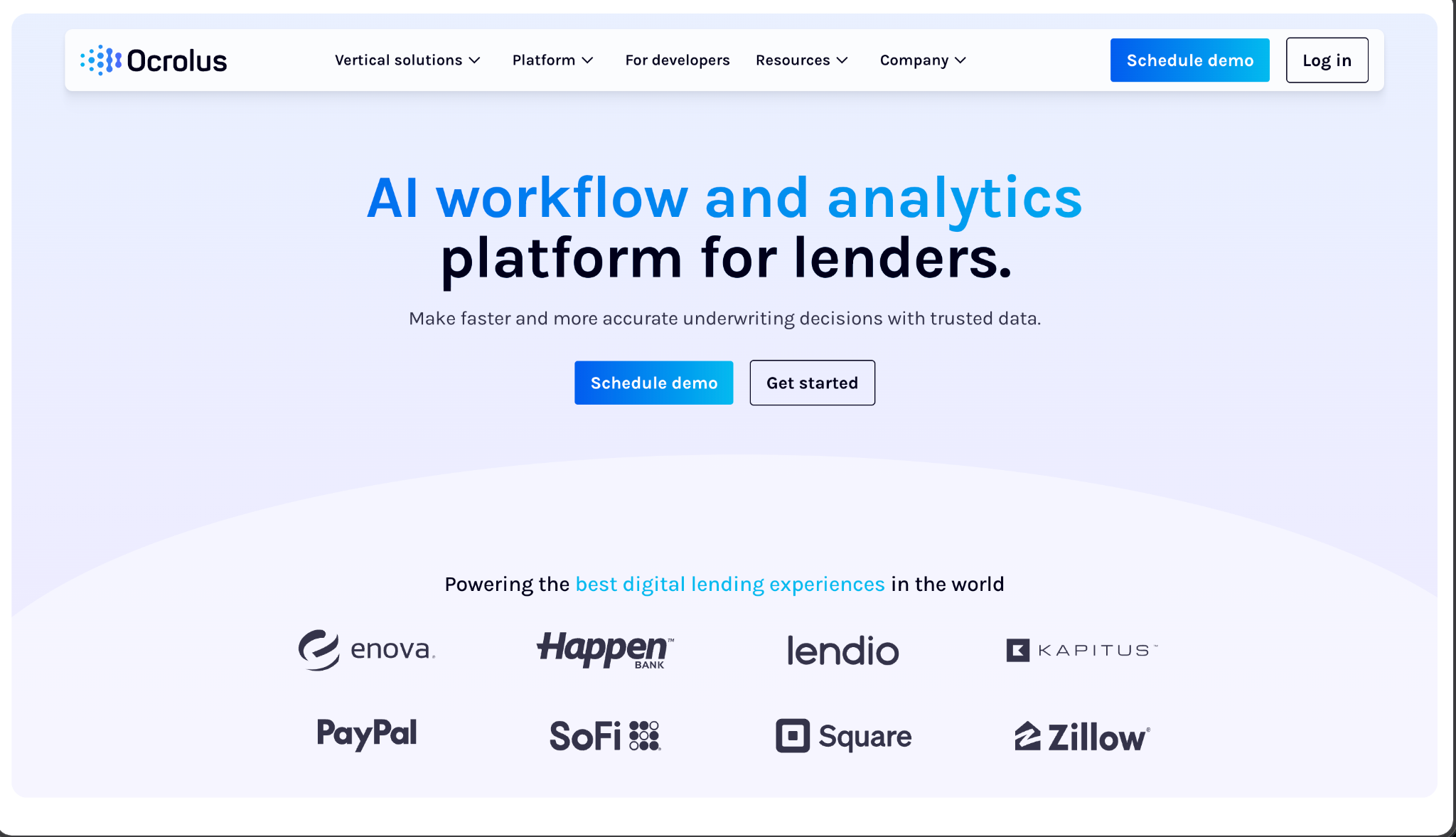
Best for: Lending teams where catching doctored bank statements and pay stubs matters as much as extraction accuracy.
Ocrolus goes deep on one specific job rather than broad coverage. It's built specifically for the lending ecosystem, powering underwriting decisions for well-known fintech and lending platforms, and its Detect layer flags bank statements and pay stubs that show signs of post-creation editing.
Key Functionalities
- Detect layer flags bank statements and pay stubs showing signs of post-creation tampering.
- Lending-specific focus built around the documents a lender reviews most: bank statements, pay stubs, and tax forms.
- Underwriting integrations already powering decisions for established fintech and lending platforms.
Pros:
- Fraud and tampering detection most general-purpose extraction tools simply don't offer
- Proven in production underwriting workflows at real lending platforms
Cons:
- Narrow by design, a team also processing insurance-specific formats like loss runs won't find that coverage here
- Not built for the insurance side of a mixed finserv and insurance document flow
Pricing: Not published on the company's public pages.
Verdict: The clear pick for a lending-only team where tampering detection is a core requirement, not a nice-to-have.
4. Indico Data: Best for Unstructured P&C Claims and Broker Submissions
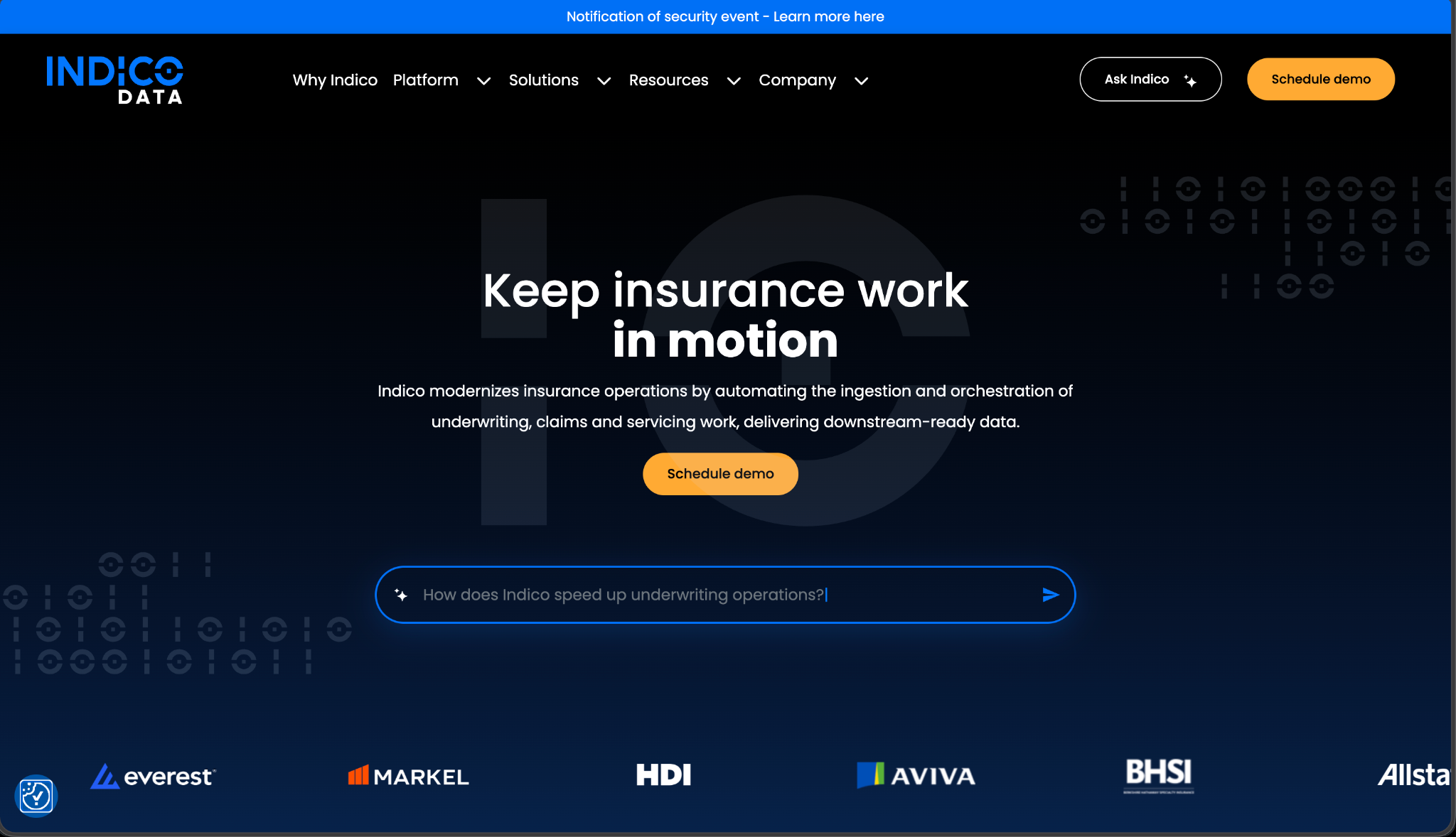
Best for: A property and casualty insurer drowning in inconsistent submissions and claims documentation from brokers, adjusters, and policyholders who don't use the same form.
Indico Data targets a different gap entirely: the genuinely inconsistent paperwork a P&C insurer receives from multiple stakeholders. Rather than matching a fixed template, the platform interprets document context the way a human reviewer would, built on a large underlying labeled dataset described in the company's own documentation.
Key Functionalities
- Context-based interpretation reads unstructured submissions without requiring a fixed template match.
- Built for multi-stakeholder claims flow, where brokers, adjusters, and policyholders each submit paperwork differently.
- Enterprise-proven results, with one named customer reporting $100 million in savings from applying the platform to unstructured claims data.
Pros:
- Purpose-built for the least standardized part of P&C insurance document flow
- Strong enterprise case study with a concrete, named savings figure
Cons:
- No specific accuracy percentage or pricing published on the company's own site
- Narrower fit outside P&C claims and broker submissions specifically
Pricing: Not published.
Verdict: The strongest option for an insurer whose real pain point is inconsistent broker and claims paperwork rather than standard forms.
5. Nanonets: Best for No-Code Workflows Without Dedicated Engineering Support
Best for: A finance or operations team that needs extraction and routing logic running reliably without engineering support to maintain it.
Nanonets solves for a different constraint altogether. Its drag-and-drop builder connects natively to common ERP and CRM systems, and the platform improves from reviewer corrections rather than requiring a full retrain.
Key Functionalities
- Drag-and-drop workflow builder lets an operations team configure extraction logic without engineering support.
- Native ERP and CRM integrations connect extraction output directly to existing business systems.
- Learns from reviewer corrections instead of requiring a full model retrain each time.
Pros:
- Accessible to teams without dedicated engineering resources
- Connects directly into existing business systems
Cons:
- Pay-per-block pricing is harder to forecast than a flat per-document rate
- Not built with insurance-specific formats as a pre-configured category, so an irregular loss run or ACORD variant is more likely to hit a real limit here
Pricing: Pay-per-block pricing starts around $499 a month, though the exact cost varies with workflow complexity.
Verdict: A solid fit for an operations team that needs a maintainable no-code setup, less suited to genuinely irregular insurance document formats.
Where Should You Start
The honest starting question isn't which tool has the best marketing page. It's how varied the actual incoming documents are and what matters most once they're extracted. A lending team where fraud detection matters as much as accuracy needs Ocrolus's tampering layer more than broad document coverage. A P&C insurer drowning in inconsistent broker submissions needs Indico Data's context-based approach more than a rigid template match. A large enterprise spanning multiple regulated departments needs Hyperscience's scale and handwriting recognition. A finance operations team without engineering support needs Nanonets's visual builder. A team whose documents are genuinely standard ACORD forms and common financial formats may find Docsumo's own coverage is enough as is.
A team whose document mix spans insurance, financial services or other industries such as healthcare and logistics, with structural variety across carriers, lenders, and issuers, is the case Sensible is built for. It suits teams that want to define the output schema and logic themselves, and teams that would rather have Sensible's managed services team build and maintain the configurations.
FAQs
What's the real difference between Docsumo and a hybrid extraction platform like Sensible?
Docsumo is strongest on standard, relatively consistent ACORD forms and financial documents, with 250-plus pre-trained types and per-page pricing. Sensible combines deterministic, layout-based extraction with LLM reasoning under one schema-validated API, built to handle a wider range of structural variety across insurance, financial services and other industries, with customizable output and an optional managed services team that builds and maintains the configurations. Pricing is per document and stays flat regardless of page count.
Does fraud detection matter for insurance document processing, or only for lending?
Fraud and tampering detection is most developed for lending specifically, where doctored bank statements and pay stubs are a well-documented, recurring underwriting risk. It's less commonly built into insurance-focused tools, though a team processing both lending and insurance documents should weigh whether that gap matters for its specific mix.
Why do some document automation vendors have no published pricing?
Platforms targeting larger enterprise deployments or specialized, high-stakes use cases like fraud detection commonly sell through a direct sales process rather than a published, self-serve pricing page. A team evaluating a sales-led vendor should expect a real conversation before getting a firm quote.
How does per-page pricing compare to per-document pricing on a long loss run?
Per-page pricing compounds directly with document length, so a forty-page loss run or a lengthy policy packet costs proportionally more than a one-page certificate of insurance under that model. Per-document pricing stays flat regardless of page count, which changes the real cost comparison meaningfully once a document mix includes genuinely long files.
Can a no-code tool handle ACORD forms and loss runs reliably?
It depends on how consistent the incoming formats actually are. A visual workflow builder handles fairly standard, repeatable document types well, but most aren't built with insurance-specific formats as a pre-configured category, so real layout variety in that document set is more likely to hit a limit than in a tool built around it directly.